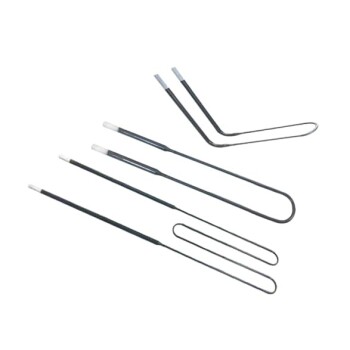
A high-precision heat treatment furnace acts as the central control unit for defining the mechanical performance of 15Cr12MoVWN steel. By providing exacting temperature uniformity and stability, the furnace enables the refinement of austenite grains during normalizing and strictly regulates microstructural evolution—specifically martensite laths and secondary precipitates—during the tempering phase.
The core value of a high-precision furnace lies in its ability to fine-tune the microscopic balance between strength and ductility. It achieves this by controlling heat input to dictate the formation of secondary precipitates (M23C6 and MX) and the density of dislocations within the steel.
The Critical Role in Normalizing
Ensuring Complete Austenitization
During the normalizing phase, the primary goal is to reset the steel's microstructure. A high-precision furnace guarantees the temperature uniformity required for the complete formation of austenite grains.
Without precise thermal distribution, parts of the material may fail to fully austenitize. This inconsistency can lead to "structural inheritance," where the previous defects or grain structures persist, compromising the final properties.
Grain Refinement
Beyond simple formation, the furnace's stability ensures the refinement of these austenite grains.
Controlled heating prevents the grains from growing excessively large, which is a common risk in less accurate environments. Finer grains are essential for setting the stage for a tough, durable final product.
Regulating Microstructure During Tempering
Controlling Martensite Morphology
Following the hardening phase, the steel contains a hard but brittle martensitic structure. The furnace allows for precise control over heat input to regulate the martensite lath width.
By carefully adjusting this width, the process modifies the material's hardness. This ensures the steel retains structural integrity without being susceptible to brittle fracture.
Managing Secondary Precipitates
For 15Cr12MoVWN steel, the mechanical performance relies heavily on specific precipitates. The furnace environment is critical for optimizing the distribution of secondary precipitates such as M23C6 and MX.
These precipitates act as pinning points that strengthen the matrix. Uniform temperature distribution ensures these particles are dispersed evenly throughout the material, avoiding clusters that could create weak points.
Tuning Dislocation Density
The tempering process is essentially a stress-relief mechanism. The furnace facilitates the precise relaxation of the material structure to control dislocation density.
This reduction in dislocation density lowers internal stress and improves ductility. The precision of the furnace ensures this relaxation happens uniformly, preventing localized areas of high stress that could lead to failure.
Understanding the Risks of Imprecision
The Danger of Thermal Gradients
If the furnace lacks precision, thermal gradients (uneven temperatures) can occur across the workpiece.
In the normalizing phase, this results in mixed grain sizes, leading to unpredictable mechanical behavior. In the tempering phase, it causes uneven hardness, where some sections are too soft (over-tempered) and others remain too brittle (under-tempered).
Impact on Precipitate Stability
Inaccurate temperature control can disrupt the formation of M23C6 and MX precipitates.
If the temperature fluctuates too high, these precipitates may coarsen, significantly reducing the steel's creep strength. If the temperature is too low, they may not precipitate sufficiently to provide the necessary reinforcement.
Making the Right Choice for Your Goal
To maximize the potential of 15Cr12MoVWN steel, align your furnace parameters with your specific engineering requirements:
- If your primary focus is maximum strength: Prioritize precise tempering temperatures that maintain a finer martensite lath width and ensure a dense, uniform distribution of MX precipitates.
- If your primary focus is ductility and impact toughness: Focus on the normalizing phase to ensure complete grain refinement and allow for sufficient reduction of dislocation density during tempering.
Ultimately, the high-precision furnace transforms heat treatment from a general process into a precise tool for microstructural engineering.
Summary Table:
| Heat Treatment Phase | Primary Furnace Function | Microstructural Impact |
|---|---|---|
| Normalizing | Temperature Uniformity | Complete austenitization & grain refinement |
| Tempering | Precise Heat Regulation | Control of martensite lath width & dislocation density |
| Precipitation | Thermal Stability | Optimized distribution of M23C6 and MX precipitates |
| Quality Control | Gradient Elimination | Prevention of mixed grain sizes and uneven hardness |
Elevate Your Material Performance with KINTEK Precision
Precision is the difference between material failure and engineering excellence. KINTEK specializes in advanced laboratory equipment designed to meet the rigorous demands of metallurgical research and industrial heat treatment.
Our comprehensive range of high-temperature furnaces (muffle, tube, vacuum, and atmosphere) provides the exacting thermal stability required to master the microstructural evolution of 15Cr12MoVWN steel. Whether you are refining austenite grains or managing complex precipitate distributions, our technology ensures uniform results every time.
Beyond furnaces, KINTEK supports your entire workflow with:
- Crushing, milling, and sieving systems for sample preparation.
- High-pressure reactors and autoclaves for specialized material synthesis.
- Advanced cooling solutions and essential ceramic/PTFE consumables.
Ready to transform your heat treatment from a general process into a precise microstructural engineering tool?
Contact KINTEK today to find the perfect furnace solution for your lab!
参考文献
- Tingwei Ma, Ping Wang. Effect of Heat Treatments on Microstructural Evolution and Tensile Properties of 15Cr12MoVWN Ferritic/Martensitic Steel. DOI: 10.3390/met10091271
本文还参考了以下技术资料 Kintek Solution 知识库 .